Table of contents (7)
Two wood-grain surfaces can appear nearly identical while carrying completely different protective systems underneath—natural oiled timber, lacquered veneer, or thermally fused laminate. Using the wrong chemical, such as ammonia glass spray on an oiled oak tabletop, quickly strips protection and leaves cloudy patches.
Always verify the finish code recorded in your handover pack before daily cleaning, and begin with the mildest care method endorsed by the manufacturer.
Match cleaning products and habits to each wood finish
Each finish architecture responds differently to damp cloths, pH-neutral detergents, and periodic reconditioning.
| Finish Type | Safe Routine Cleaning | Avoid at All Times | Maintenance Rhythm |
|---|---|---|---|
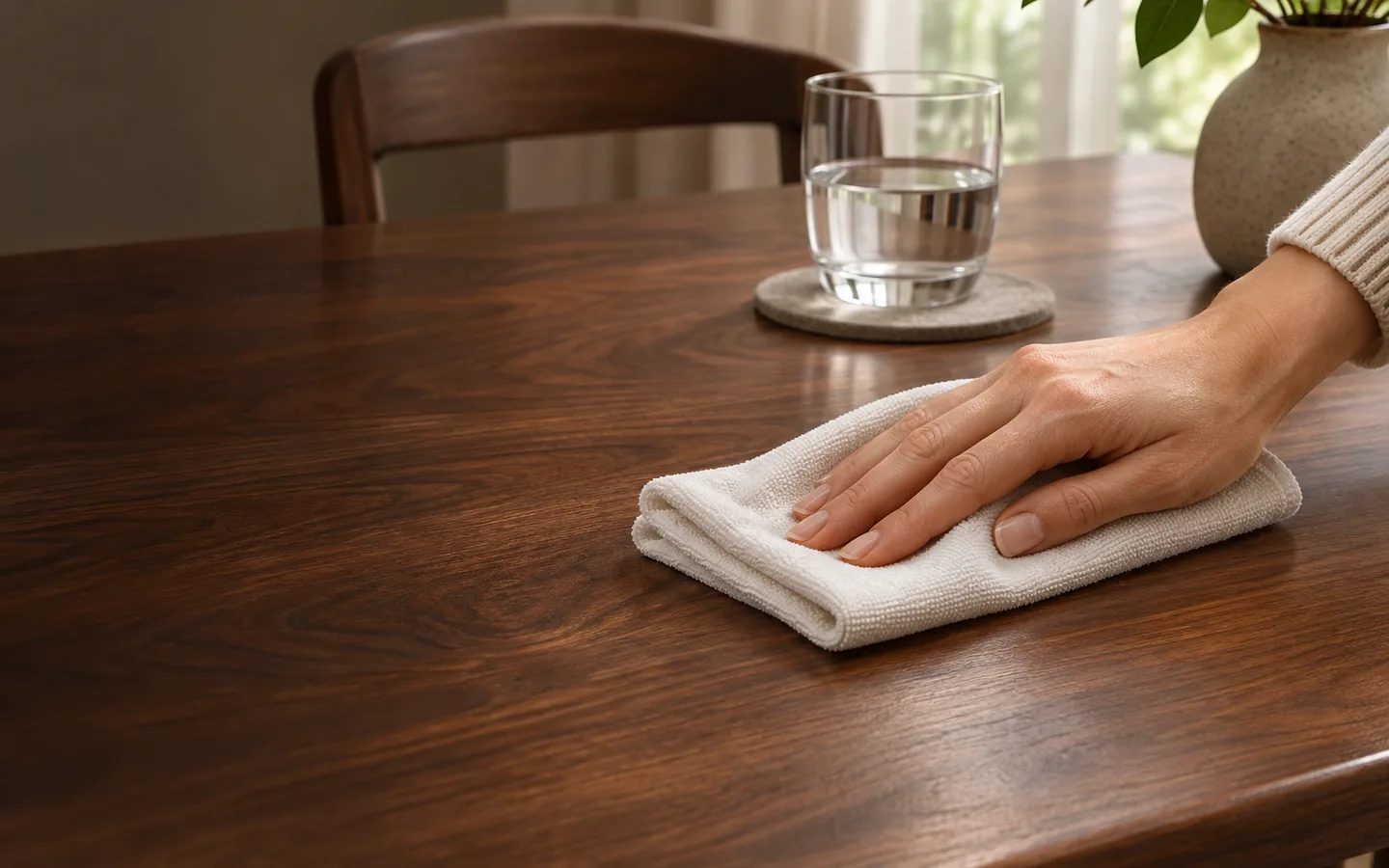
| Lacquered solid wood or veneer | Dust with a dry clean microfibre cloth; wipe with a tightly wrung damp cloth only if care notes allow, then dry promptly | Abrasive pads, scouring powder, acetone, or ammonia-based sprays | Check seam seals regularly and polish only if approved |
| Oiled natural timber | Lift loose dust with a soft dry cloth; spot-clean using pH-neutral cleaner formulated for that specific oil system | Excess standing water, strong alkaline degreasers, or silicone-based furniture sprays | Refresh with compatible maintenance oil as surface traffic dictates |
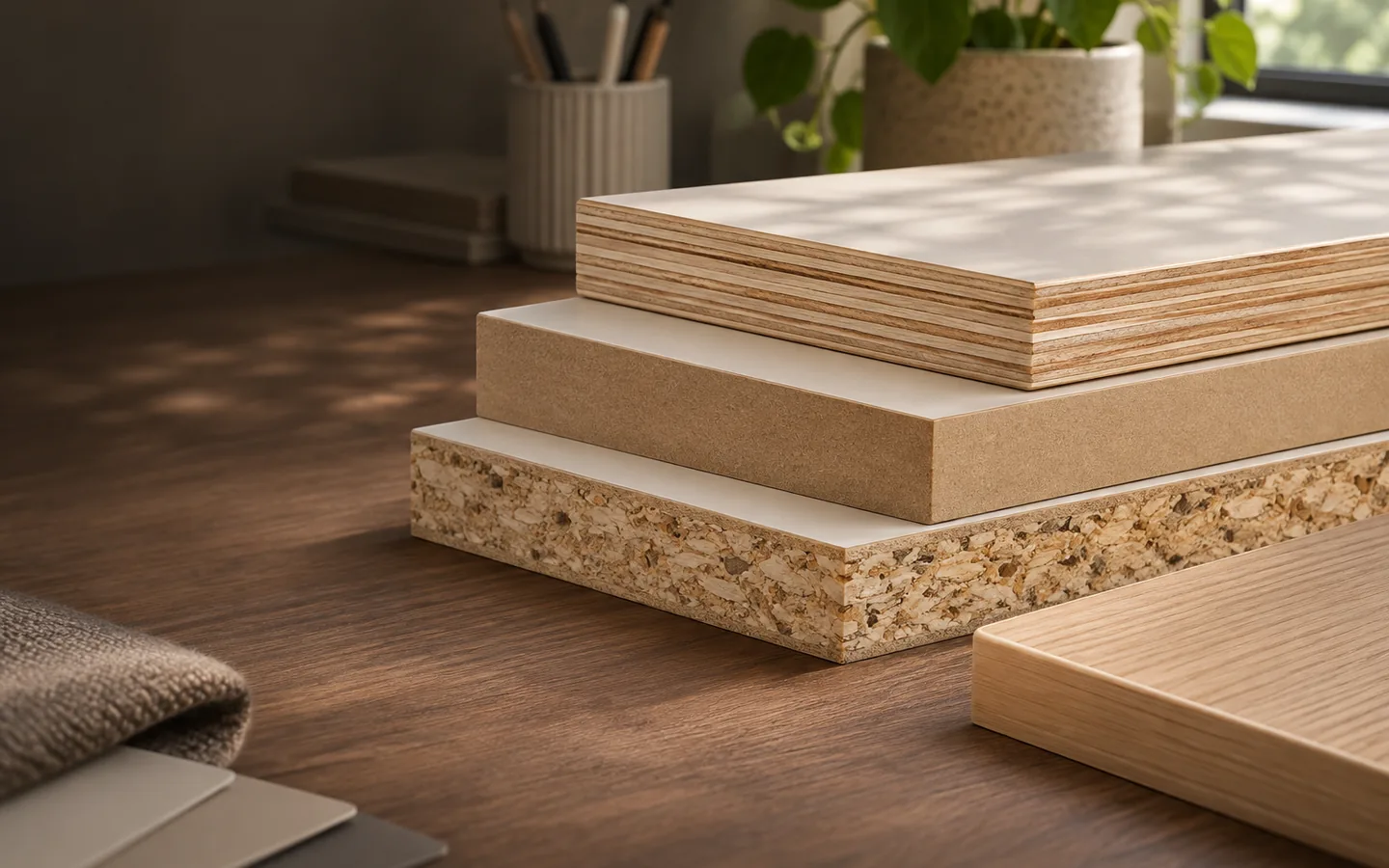
| Laminate (HPL) & Melamine | Clean using a soft damp cloth and plain water or mild diluted soap, followed immediately by a dry buffing cloth | Direct steam jets aimed at joints, acidic bathroom cleaners, or solvent thinners | Keep panel edges and floor-level plinth joints dry after mopping |
| Deep brushed or textured finishes | Wipe strictly along the grain direction; use a soft bristle brush to clear dust from textured pores | Scrubbing hard across the grain which can create shiny burnished spots | Clean gently and blot textured valleys completely dry |
Even when using a manufacturer-endorsed cleaner, test it on an inconspicuous underside edge first to verify there is no dulling or colour shift.
Three-step spill containment for edges and joints
A brief puddle on the centre of a sealed top is far less risky than liquid creeping down into edge-band joints, floor plinths, or knock-down cam housings.
- Blot vertically—do not smear: Press a clean absorbent cloth straight onto the spill to lift liquid before it spreads toward seams.
- Dry thoroughly with a fresh dry cloth: Follow immediately with a clean dry section, paying extra attention to edge junctions, plinth feet, and leaf joins.
- Inspect and report early edge swelling: If an edge tape lifts or core fibres swell, take clear photos and ask the furniture supplier before sanding or regluing.
- Watch wet floor mopping around bases: Ensure housekeeping staff keep wet mop water from pooling against cabinet plinths and solid-wood table feet.
Control heat, UV sunlight, and ambient humidity swings
Timber and wood-based composites remain hygroscopic materials that expand or contract subtly in response to interior heat and humidity changes.
- Direct heat & hot appliances: Place insulating trivets under hot dishes and coasters beneath cold sweating glasses or high-heat desk electronics.
- Decorative hardware scratches: Attach soft felt pads under unglazed ceramics, cast metal bases, and rough stone trays.
- Unbalanced direct sunlight: Avoid leaving half of a timber table in strong direct sun all day to minimise uneven UV colour toning.
- Heating vents & damp condensation: Keep solid-wood furniture clear of radiator vents and damp exterior windows; maintain stable room humidity within manufacturer limits.
Using a single all-purpose commercial cleaner across every surface in a building is the fastest way to cloud lacquered veneers and strip oiled dining tables.
Issue surface-specific care notes at project handover
In serviced apartments, hospitality venues, and corporate offices where housekeeping teams rotate regularly, leave a concise one-page care chart mapped to room zones—listing exact finish codes, approved cleaners, spill procedures, and who to contact when surface wear appears.
Frequently Asked Questions
Are supermarket silicone polish sprays safe for wood veneer and laminate furniture?
No. Silicone polishes build up a hazy film that attracts dust, leaves uneven streaks under oblique light, and interferes severely with future lacquer repair or oil recoating.
Can white heat rings on lacquered wood be removed by ironing or using heat?
Never apply direct heat or an iron onto a damaged lacquer film—this risks blistering or scorching the coating permanently. Allow gentle drying first and consult a timber finisher if haze remains.
Further reading
- How to Approve Wood Furniture Finishes Under Real Room Lighting
- Wood Furniture Handover Inspection Checklist: Specs, Finish, Function